







Many new investors have wondered whether precious metals deserve a spot in their portfolios. Gold, silver and other precious metals have long been recognised as a hedge against inflation and market uncertainty, but they are not a one-size-fits-all solution. Whether they work for you depends on your goals, risk tolerance and how you choose to gain exposure.
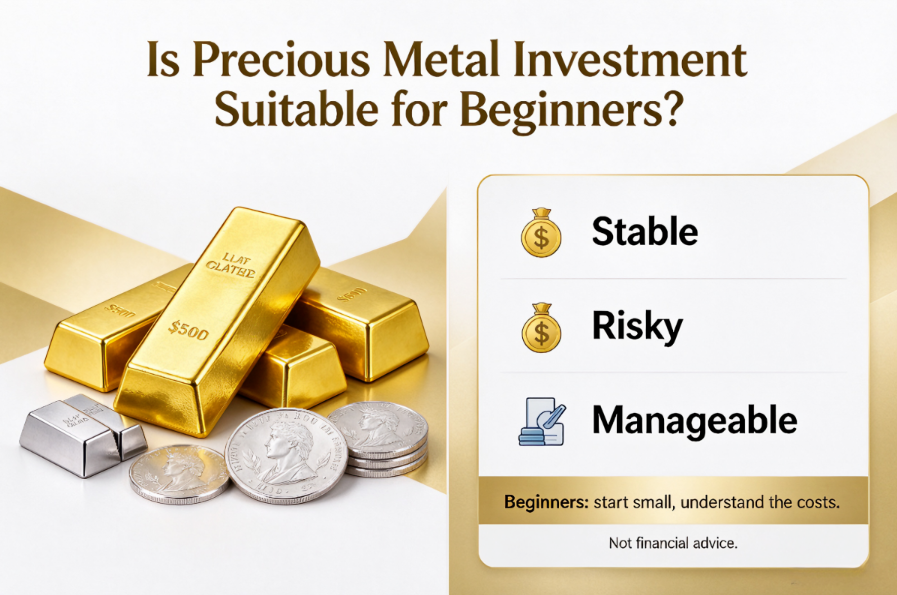
For new market participants, the biggest appeal of precious metals is diversification. Stocks and bonds often move in line with economic cycles, while metals can behave differently during periods of volatility. This makes them a useful buffer when traditional assets come under pressure. Still, beginners need to set realistic expectations: precious metals do not pay dividends or interest, and their prices can swing sharply in response to headlines, interest rate shifts and global sentiment. They are less about steady passive income and more about balance.
Physical bullion is the first route many people picture. It gives you tangible ownership, yet it comes with practical hurdles: storage, insurance, verification and higher transaction premiums. That is why many beginners prefer indirect exposure, tracking metal prices without the logistics of holding bars or coins. This approach lets you start with smaller capital, monitor live markets and practise before committing larger sums.
If you are new, a few simple rules will reduce unnecessary stress. First, keep precious metals as a modest slice of your overall portfolio. Most conservative guides suggest an allocation of around 5–10%, rather than going all-in. Second, start with learning. Take time to understand what drives gold and silver prices, and get comfortable with basic risk controls. Third, look for an intuitive environment that supports your learning curve. A demo account is especially valuable here, as it lets you read charts and test market ideas without putting real funds at risk.
This is where platform selection matters. A beginner-friendly space should have clear pricing, reliable market data, built-in risk tools and educational resources to fill knowledge gaps. UPWAY Global (https://www.jrjr.com/en/?340) is one option built with newer investors in mind, offering streamlined access to precious metal markets alongside learning materials and demo functionality. It removes much of the friction that can confuse people who are just getting familiar with metal price movements, while still encouraging users to trade carefully and stay aware of market risks.
So, back to the original question: yes, precious metal investment can be suitable for beginners, but only with the right mindset. It works best for those who want to diversify, are patient enough to handle price swings, and prioritise learning before chasing quick gains. If you approach it thoughtfully, start small and use trusted tools to build your understanding, precious metals can become a calm, considered part of your long-term financial plan.
Disclaimer:This content is for informational purposes only and should not be construed as financial advice.