







If you are new to precious metals, this is almost always the first question you ask. On the surface, gold and silver look similar — both are timeless safe-haven assets that many investors turn to when markets feel uncertain. But their market behaviour, risk profile and suitable goals are very different, and picking the wrong one for your plan can lead to unnecessary stress.
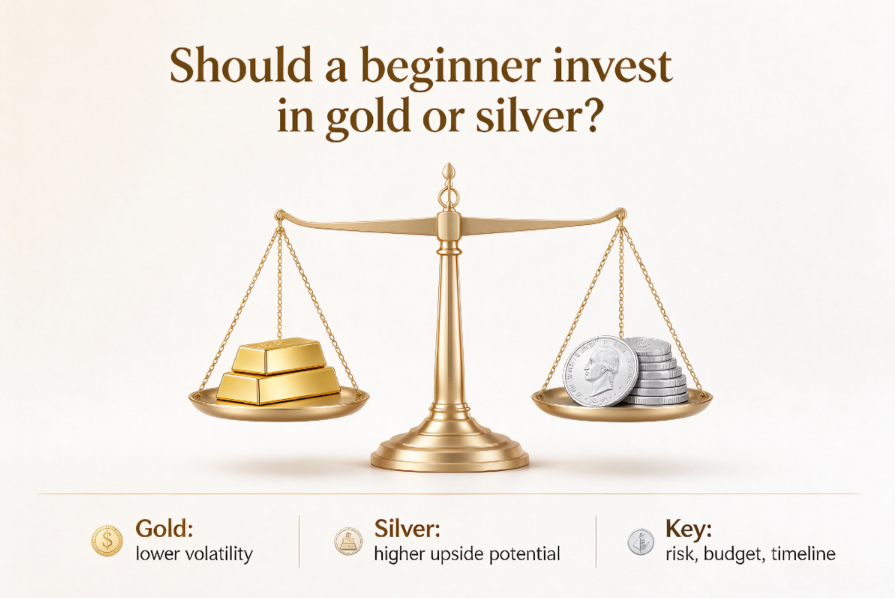
Gold has long been the anchor of precious metal portfolios. It is widely recognised as a store of value, backed by consistent institutional demand, and tends to move with much less dramatic volatility. Its liquidity is strong worldwide, which means it is usually easier to enter and exit positions without facing large pricing gaps. For new investors whose main aim is portfolio diversification and long-term wealth preservation, gold is often the more comfortable starting point. It suits people who prefer steady, gradual exposure instead of frequent sharp price swings.
Silver tells another story. It carries dual demand drivers: it works as a monetary hedge, but roughly half of its consumption comes from industrial sectors including solar technology, electronics and medical equipment. This makes silver more sensitive to global economic cycles. When industrial activity picks up, silver can deliver impressive percentage gains; yet during slowdowns, its price may fall harder than gold. The lower per-ounce price also makes silver appealing for those with a modest starting budget. The trade-off is higher volatility, which can be challenging for beginners who have not learned risk management.
This leads to a common misconception: you do not need to choose only one metal. Many experienced precious metals investors build a core position in gold for stability, then add a smaller silver allocation to capture upside opportunities. A balanced mix helps you get the best of both worlds, while limiting overexposure to silver’s bumpier price action. Before you decide on your ratio, take time to clarify your own goals: are you investing to protect savings from inflation, or chasing shorter-term market moves? How comfortable are you seeing your position swing in value?
For beginners, it is also wise to think about how you gain exposure. Physical bullion comes with storage, insurance and premium costs, which can eat into returns, especially for small holdings. Digital market access lets you track gold and silver prices in real time, test your judgement without buying physical metal, and adjust your allocation flexibly. Many new learners start with a demo environment to study price trends, the gold-silver ratio and how news impacts metals before committing real funds.
If you are searching for a straightforward, beginner-friendly space to follow gold and silver markets, UPWAY Global offers clean charting tools and educational resources tailored for those getting started with precious metals. You can watch both markets side by side, practise reading price action, and build confidence at your own pace before settling on your preferred allocation. It is a practical option if you want to learn without the hassle of arranging physical storage.
No investment comes without risk, and precious metals are no exception. Even gold can experience extended periods of sideways or downward movement. The best strategy for most beginners is to keep your precious metals allocation modest within your wider portfolio, set clear risk boundaries, and avoid rushing into large positions based only on short-term market hype.
To wrap up: if you are risk-averse and prioritise stability, start mainly with gold. If you have a small budget and can accept bigger swings, a small silver position may complement your holdings. The smartest approach for most new investors is to learn both markets, understand their unique drivers, and build slowly.
Disclaimer:This content is for informational purposes only and should not be construed as financial advice.