







Gold has long stood out as a favoured safe-haven asset for traders around the world. Its price reacts to major economic releases, central bank decisions and global market sentiment, creating frequent trading opportunities. For those brand-new to the gold market, jumping straight into live trading with real funds can feel overwhelming and carry unnecessary risk. This is exactly where gold simulated trading, or demo trading, comes in — your low-pressure training ground to learn how XAU/USD moves, practise order execution and build basic trading habits.
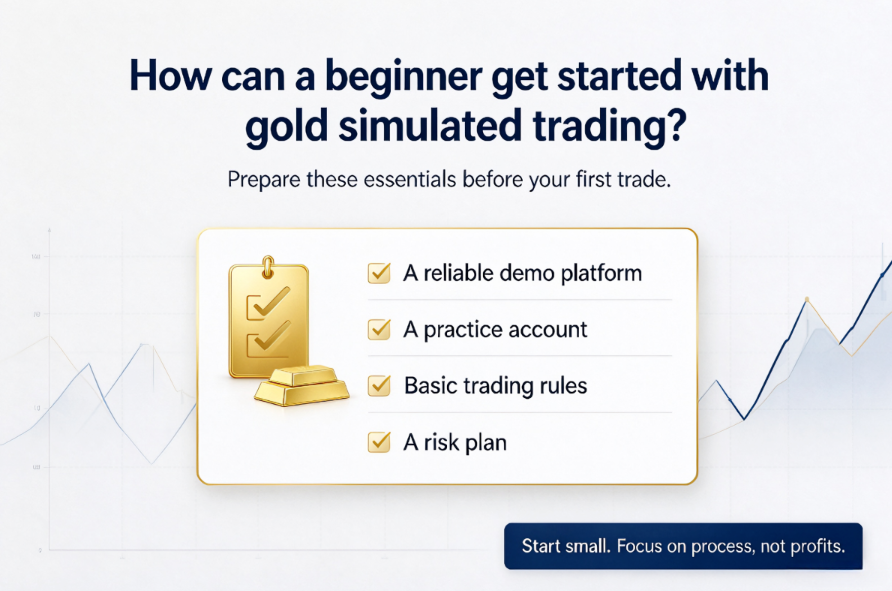
So, what does gold simulated trading actually involve? A demo account mir****s live market conditions with real-time gold price feeds, charting tools and the same order functions you would use in live trading. The only difference is you trade with virtual capital. You can place buy and sell orders, set stop-loss and take-profit levels, test indicators and watch how gold reacts to news events, without putting your own money on the line. This makes it the ideal starting point for anyone who wants to understand gold trading mechanics first.
Here is a simple step-by-step routine beginners can follow to get the most out of simulated gold trading.
First, pick a reliable trading environment that offers accurate gold price data and stable charting tools. A good demo setup should support MT4 or MT5, the widely used platforms for precious metals analysis, with clean chart timeframes, technical indicators and clear order panels. Many new traders spend hours practising only to find their demo feed lags or behaves differently from live markets, which undermines all their practice. It pays to choose a provider that keeps demo market conditions consistent with live pricing.
Once you have access to your demo space, start slow. Do not rush into dozens of trades in your first session. Begin by exploring the interface: locate XAU/USD in the symbol list, switch between 1H, 4H and daily charts, and practise placing market and pending orders. Learn how to adjust position size and set risk controls before you focus on predicting price moves. Mastering these basic actions removes the stress of fumbling with the platform when markets move fast.
Next, build a simple practice plan. Decide how much virtual capital you will treat as your “practice budget”, and stick to sensible risk rules. Many experienced traders suggest risking no more than 1% to 2% of your account per trade, even on demo. Keep a short trading journal to note down your entry reason, target price and what you learned after each trade. This habit separates casual clicking from genuine skill-building. Remember, demo trading works best when you treat virtual funds as seriously as real capital.
Take time to observe what moves gold prices. Watch how CPI releases, interest rate updates and risk-off shifts trigger volatility on your gold charts. You will quickly notice gold can swing sharply around key announcements. Simulated trading lets you experience these volatile moments, see how spreads behave and test whether your strategy holds up, all before you face the emotional pressure of live positions.
A common mistake new learners make is treating the demo phase as a quick checkbox. Many move to live trading after a few lucky winning demo runs, only to struggle once real capital is involved. Use your simulated period to test one or two straightforward strategies, refine your entry timing and build consistency. Spend several weeks practising, and only consider live trading once you can follow your own plan steadily.
If you are looking for a beginner-friendly place to start this journey, UPWAY Global provides free gold demo access built on familiar MT4 and MT5 infrastructure. The simulated environment delivers real-time XAU/USD pricing, so you can practise gold market analysis and order execution under conditions close to live markets. It is easy to register for a demo account, explore gold charts and test your trading ideas at your own pace. This kind of accessible simulated space works well for new traders who want to learn gold trading without the pressure of immediate financial risk.
To wrap up, gold simulated trading is not just a fun market simulator. It is the most practical first step for beginners who want to understand how gold markets work, learn platform workflows and develop steady risk management habits. Start with a clear learning goal, keep your practice disciplined, take notes on every trade, and give yourself time to build confidence. When you approach demo trading with patience and structure, you lay a much stronger foundation for your long-term gold trading journey.
Disclaimer:This content is for informational purposes only and should not be construed as financial advice.